
Local Stories
Tech Doesn’t Only Mean Software
The Lehigh Valley’s apprenticeship and career-school routes make room for people who want to understand machines, materials, and electronics. A look at technical learning beyond the instruction to learn to code.
“Interested in technology” is often treated as a polite way of saying “interested in programming.” That leaves out a lot of people who would be very good at making technology work.
Someone who wants to understand why a machine stopped, how a sensor measures something, or how a part gets inspected is asking a technical question. They may need software to answer it. They may also need a drawing, a meter, a fixture, a conversation with an operator, and the patience to test one possibility at a time.
The Lehigh Valley offers a better picture of technical education than a single instruction to learn to code. Its apprenticeship and career-school material describes paths into work where physical processes and information have to agree.
A local route into making things
The Industrial Training and Education Consortium of the Lehigh Valley, or iTEC, describes apprenticeships that combine supervised work with related instruction at a college. Its current resources identify industrial manufacturing and mechatronics among its programs. Mechatronics brings mechanical equipment, electronics, and control software together.
The consortium says participating companies select apprentices through a hiring process. Pay and benefits depend on the employer. Lehigh Carbon Community College and Northampton Community College provide related instruction. The details belong on iTEC’s current pages, linked below; this article is not a promise of an opening, placement, or particular wage.
Lehigh Career & Technical Institute also presents work-based learning as part of its curriculum. These are different institutions and routes, not interchangeable programs. Their shared value for this discussion is that learning can be connected to something outside an exercise on a screen.
A machine doesn’t care which subject owns the problem
Imagine a teaching exercise in which a sensor detects a passing object and a small display reports the count. This is a hypothetical learning project, not a description of a particular school’s equipment.
A wrong count could come from the program. It could also come from a loose connection, a badly positioned sensor, an object that behaves differently from the earlier test objects, or a misunderstanding about what should count as one event.
The student has to cross subject boundaries. They must describe the intended behavior, notice what happened, and choose a test that distinguishes between explanations. Writing more code before doing that may simply produce a more elaborate misunderstanding.
This kind of work makes room for several strengths. Someone may be careful with wiring. Someone else may notice an unclear instruction. Another person may be good at recording the test conditions. Those contributions are part of engineering, even before anybody writes a function.
Hands-on should mean thinking with evidence
A blinking light is satisfying. So is a moving motor. But a demonstration that works once is only the beginning of a useful lesson.
Can the learner explain why it worked? Can they reproduce it after putting the equipment away? Can another person follow their notes? What happens if the input changes? Which parts of the setup are safe for them to change, and which require an instructor?
These questions turn an activity into a practice. They also keep technical confidence proportionate. “I made it happen” is a good start. “I understand enough to test it again” is stronger.
Care matters here. An educational project should fit the learner’s experience and the supervision available. Working with physical equipment is not an invitation to improvise around power, moving parts, or unfamiliar tools. Knowing when to stop and ask is a technical skill.
Software belongs in the picture
None of this is an argument against programming. Code is a powerful way to describe a process precisely enough for a computer to carry it out. It becomes more interesting when the process matters to someone.
A student who is bored by an abstract exercise may become curious when the same idea controls something they can see. A student who enjoys software may learn to respect how noisy and inconsistent physical inputs can be.
There is a useful disagreement between the screen and the bench. The screen encourages exact symbols and tidy categories. The bench introduces tolerances, worn connectors, awkward access, and hands that cannot reach two places at once. Good technical work learns from both.
Ask better questions about a training route
A course title is not enough to choose a program. A prospective learner needs to understand the arrangement around it.
Who provides instruction? What does the supervised work involve? What prior knowledge is expected? Which costs are covered, and which still belong to the learner? How does transportation fit the schedule? What credential is earned, and what does an employer understand that credential to mean?
These are questions to take to the provider, not details to guess from a brochure. Requirements and available places can change. A friendly inquiry is more useful than building a plan around an old search result.
For a young person, the same conversation should include a parent, guardian, or school adviser as appropriate. For an adult changing careers, scheduling and income may be as decisive as the subject. Respecting those constraints makes the advice more useful.
Documentation is hands-on work too
Technical writing sometimes gets treated as the task left over after the interesting work. In a workshop, the notes can be what lets the next person work safely and understand the result.
A good record names the setup, the change, and what happened. It separates an observation from an explanation. “The count increased twice” is an observation. “The sensor is broken” is a conclusion that still needs evidence.
Learning that distinction early helps in repair, manufacturing, software, and everyday troubleshooting. It also makes collaboration less personal. People can compare tests instead of defending guesses.
Give curiosity more than one entrance
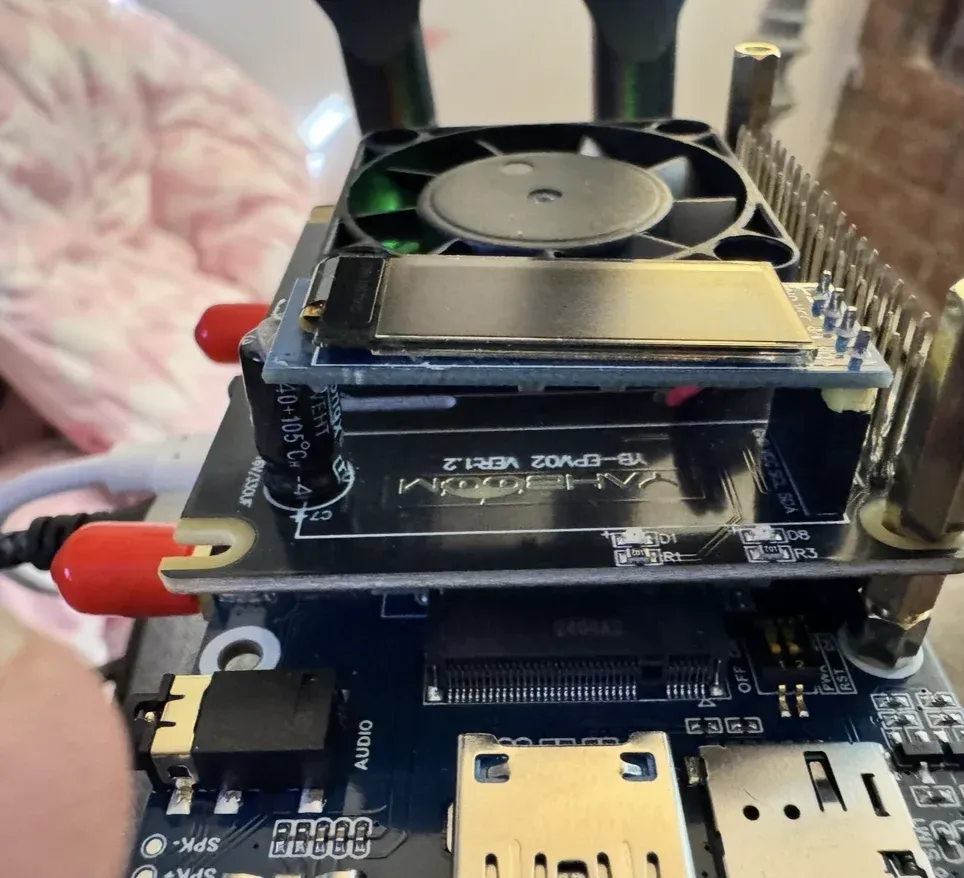
Our small-computer builds make the appeal of this mixed work easy to see. A board stack presents questions about power, cooling, connections, access, and software at the same time. The photograph here comes from theProject.’s own build material, not from an iTEC or LCTI classroom.
A region that makes physical things has reason to describe technology broadly. Some people will write software. Others will maintain equipment, inspect products, test materials, or connect disciplines that don’t speak the same language.
The useful invitation is not “everyone should become a programmer.” It is to find a technical problem that makes you curious, then find a serious way to learn how to work on it. The Lehigh Valley’s education and apprenticeship routes give that conversation somewhere concrete to start.
Sources / further reading
Apprenticeship resources — iTEC Lehigh Valley. Program information checked September 12, 2026.
Lehigh Career & Technical Institute — LCTI. Current institutional description of work-based learning, checked September 12, 2026.